
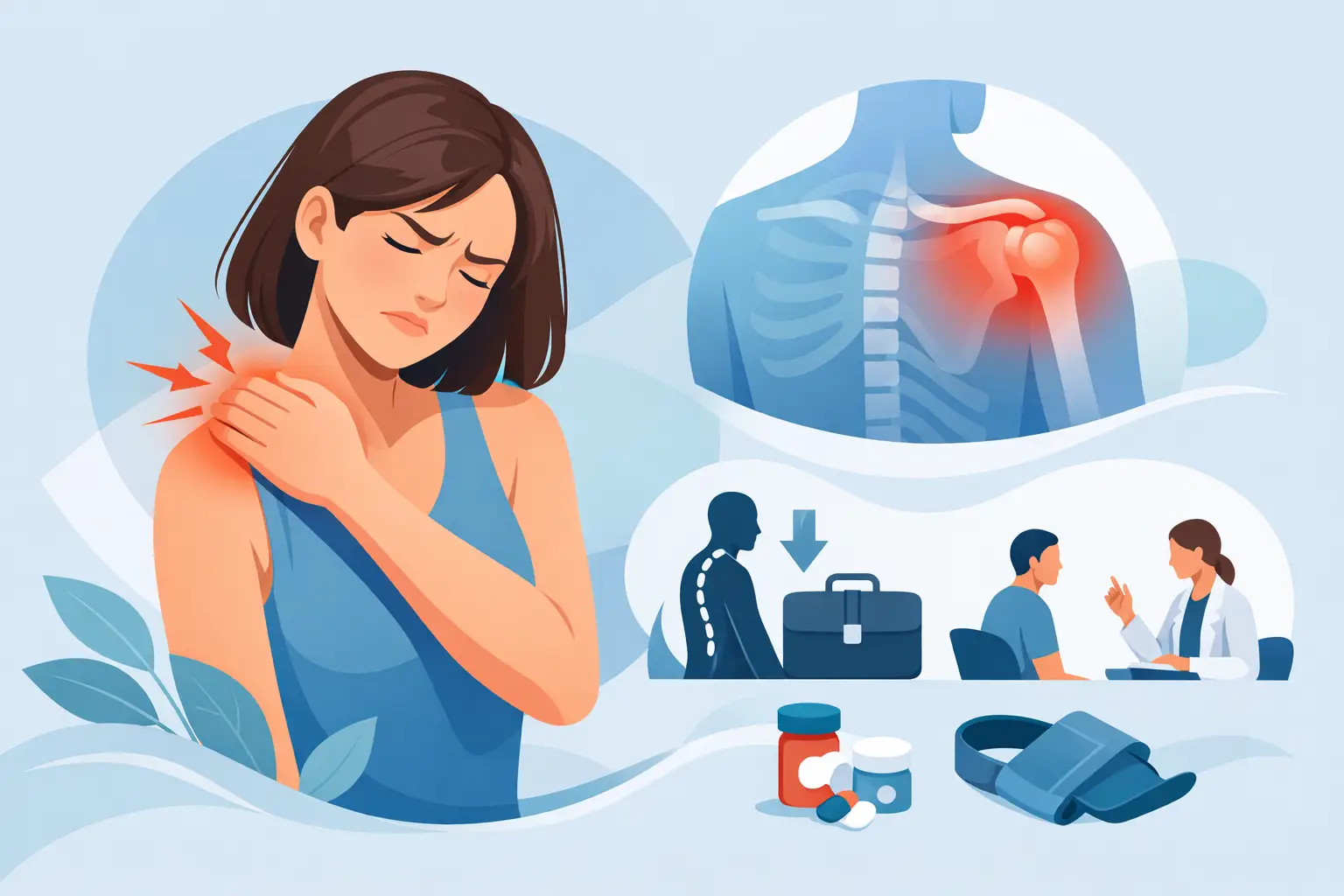
The pressure often sits exactly where work, stress and posture come together: at the top of the shoulder, at the transition to the neck or deep in the shoulder blade area. who asks What helps with shoulder pressure, usually doesn’t want to be able to sit, sleep, work and turn his head freely, but doesn’t want to be able to sit freely again. The first step is still crucial: shoulder pressure can come from a simple tension, but also be a signal to take a closer look.
What helps with shoulder pressure in everyday life?
In many people, shoulder pressure does not arise from a single event, but through hours of repetition. The view of the screen moves forward, the shoulders pull up unnoticed, the jaw becomes firm. In addition, there is little movement, one-sided wearing, physical work or constant emotional stress. The muscles in the neck-shoulder area remain alert – it feels hard, heavy and sensitive to pressure.
Acute relief often begins with a simple interruption of this tension. Warmth can be pleasant, for example through a warm shower, a heat pillow or a bath. It helps especially when the shoulder feels stiff and cold. In the case of a fresh irritation after overload or a bruise, on the other hand, short-term cooling can be better. Your own feelings are decisive: what increases the pressure is not forced.
Gentle movement is usually more sensible than complete protection. Slowly circle the shoulders back, let your arms swing loosely or walk quickly for ten minutes. It’s not about sport despite pain, but about blood circulation and movement without fighting. Sudden stretches, heavy strength training and aggressive “settling” can put additional strain on an irritated shoulder.
Check the working position honestly
An ergonomic workplace can help, but an expensive chair doesn’t solve every problem. Even a good position becomes stressful if you don’t leave it for three hours. The screen should be roughly at eye level, the forearms rest loosely and the shoulders should not be pulled forward permanently.
Short changes are even more effective: get up when making calls, regularly look into the distance and change the side on which you are carrying your bag or backpack. Those who work with their shoulders raised often benefit from consciously exhaling and gently lowering the shoulder blades back and down. This small movement is not a miracle cure, but can interrupt the automatic tension reflex.
Common causes of shoulder pressure
Shoulder pressure is a symptom, not a clear diagnosis. At Tensioned Muscles If the pressure is often on both sides or moves between the neck, shoulder and upper back. It increases after sitting, stress or unfamiliar stress and often becomes more pleasant due to warmth or slight movement.
Sometimes the cause is closer to the shoulder joint itself. An irritation of tendons, bursa or the rotator cuff can be particularly painful when moving overhead, putting on a jacket or lying on the affected side. Osteoarthritis, injuries, limited mobility of the thoracic spine or complaints from the cervical spine can also be felt as a pressure in the shoulder.
Stress is not to be underestimated. Under tension, breathing often becomes flatter, the neck takes over too much holding work and the shoulders stay up. This is not “just mentally”. The muscular reaction is real and can be particularly clear after work, at night or at the weekend. Anyone who recognizes this connection has an important starting point: not only does the shoulder need relaxation, but the whole body needs more change between tension and relaxation.
Sleep, bag, training: the underrated triggers
The sleeping position can increase shoulder pressure. Side sleepers often put weight on the lower shoulder for hours, especially when the mattress is very hard or the head buckles with a pillow that is too high. A pillow between the arms or a slightly changed lying position can relieve. It sometimes takes several nights to judge whether a change really helps.
A heavy backpack on one shoulder, frequent lifting, renovation work or a new training can overwhelm the region. After an unfamiliar stress, a slight sore muscle is normal. However, if the pressure persists, the movement becomes stronger or restricts movement, the load should be adjusted instead of simply ignored.
Promote relaxation in a targeted manner instead of enduring
Many sufferers wait until the shoulders become looser “by themselves”. This can work if the load was one-off. With recurring shoulder pressure, however, the body often needs a clear counter-impulse: regular movement, better dosed stress and real regeneration phases.
Breathing exercises can be amazingly direct. Put a hand on the stomach, breathe in calmly through the nose and lengthen the exhalation a little. When exhaling, let your shoulders become heavy. Two to three minutes is not always enough for complete relaxation, but can get the body out of the constant high-voltage mode.
If you are looking for a time-efficient, non-contact way of physical relaxation, you can also use an application like exo massage consider. The method works with electromagnetic pulses, takes place fully clothed and is geared towards short regeneration times. It does not replace a medical diagnosis for unclear or severe symptoms, but it can be interesting for people who want an uncomplicated addition to exercise and recovery in the event of stress-related tension.
The scale should always be honest: does the shoulder feel freer afterwards? Does the head spin easier? Do you sleep better? And does the relief also last in everyday life? Not every method suits everyone. Good support is based on your symptoms, not on big promises.
When shoulder pressure should be clarified by a doctor
In the case of new shoulder pressure after a fall, a dislocation or a significant loss of strength, a prompt medical clarification is part of this. This also applies if you can hardly lift your arm, your shoulder is visibly swollen, reddened or overheated, or when you feel numbness and tingling up in hand or arm.
Complaints that are not clearly movement-dependent and occur together with shortness of breath, chest tightness, nausea, cold sweat, dizziness or radiating pain in the chest, jaw or left arm are particularly serious. You can’t wait here – get medical help immediately. Persistent, increasing or nocturnal pain without recognizable cause should also be examined.
In the case of less acute but recurring symptoms, clarification is useful if, despite the adjusted load, there is no clear improvement after a few weeks. Doctors or qualified therapeutic specialists can assess whether the muscles, joints, tendons, nerves or the cervical spine are more involved. This distinction determines which treatment really makes sense.
Small habits with a big impact
The shoulder does not relax permanently when everyday life forces you back into the same position every day. Therefore, plan not only a single measure, but also several short moments of relief. A walk during the lunch break, a different sleeping position, less one-sided wearing and two conscious breathing breaks per workday work stronger together than a rare major action.
Shoulder pressure does not have to become the permanent companion of your everyday life. Listen to the signals early, keep moving gently and regularly give your body the chance to find real lightness back from the tension.